



Most people trying to get their first job in ecology start from a similar place.
You may have a relevant degree, some voluntary survey experience and a list of ecological consultancies whose websites all seem to say broadly the same things.
What you often do not have is a clear sense of what ecology consultancies are actually looking for when they recruit graduate and early-career ecologists.
This is our attempt to answer that honestly. Not with vague advice about being passionate and enthusiastic, but with the practical things that can make a real difference to your application.
What Are Ecology Consultancies Really Looking For?
Ecological consultancy is ultimately a professional service.
When a client pays for a bat survey, Preliminary Ecological Appraisal or other ecological work, they are paying for somebody who can carry out the work properly, record the findings accurately and communicate them clearly.
That means the person hiring a graduate ecologist is often thinking about one practical question:
How quickly can this person become useful on live projects?
That does not mean employers expect a new graduate to work independently from day one.
They do not.
But almost everything on your application is being viewed in terms of how easily you can be trained, supervised and developed into somebody who can contribute confidently to project work.
Your degree tells them you have an academic foundation. Your survey experience shows you have spent time in the field. Your driving licence tells them you can actually get to survey sites. Your writing tells them whether you may eventually be able to turn fieldwork into a clear professional report.
Those practical details matter.
Four Things That Can Strengthen a Graduate Ecology Application
These are not necessarily the things that sound most impressive. They are the things that often make somebody easier for an ecological consultancy to employ and develop.
1. A Full UK Driving Licence
For field-based ecological consultancy roles, a full driving licence is one of the most useful things you can have.
Survey sites are often:
- remote
- poorly served by public transport
- visited early in the morning
- visited late at night
- spread across a wide geographical area
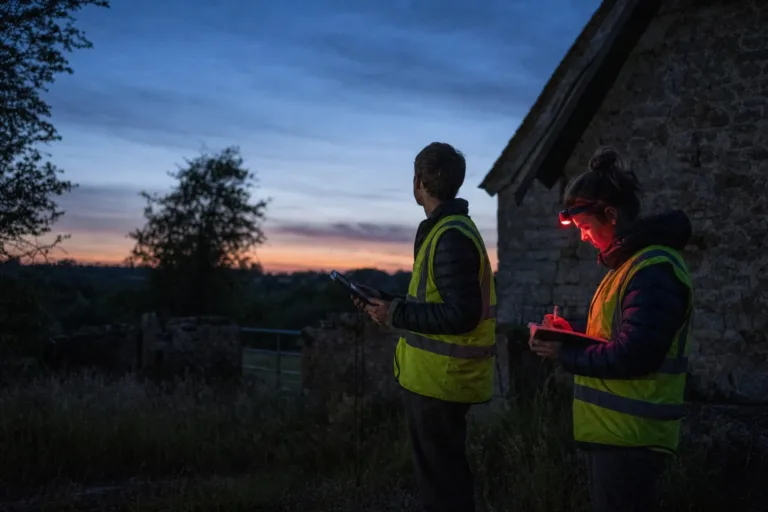
Bat surveys may finish after public transport has stopped running. Dawn surveys can start before normal services begin. Ecologists may also need to travel between several sites in one day. For that reason, many Assistant Ecologist, Graduate Ecologist and Seasonal Ecologist roles require a full UK driving licence.
If you do not have one yet, that does not automatically rule you out of the sector.
But if you are learning, say so.
For example, you could include something on your CV such as:
Full UK driving licence in progress – practical test booked for March 2027
That gives an employer far more useful information than simply leaving the subject unmentioned.
2. Species Identification Skills You Can Demonstrate
There is a big difference between being interested in a species group and being able to identify it confidently.
For example:
Interested in botany
is much less useful to an employer than:
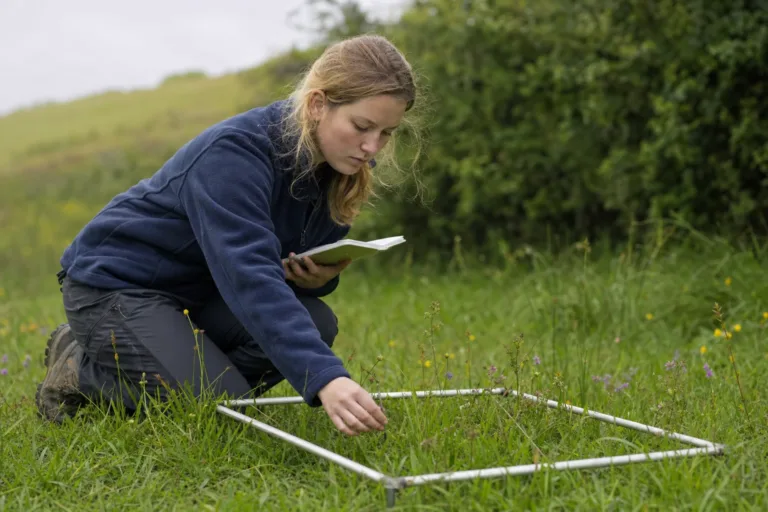
Confident identifying common grassland plants and several common grass species in the field
The second statement tells an employer something practical.
When describing species identification skills, be specific about:
- the species groups you know
- the level you can identify to
- the conditions you have worked in
- how you developed the skill
- whether your records have been verified
That could include skills in:
- botany
- birds
- bats
- reptiles
- amphibians
- invertebrates
- mammals
If you use a biological recording scheme or maintain verified species records, mention that too.
The more evidence you can provide, the more useful the skill becomes to the person reading your application.
3. Real Ecology Survey Experience
You do not necessarily need paid consultancy experience before applying for your first ecology job.
Relevant voluntary and practical experience can still carry real weight.
That might include:
- voluntary bat surveys
- breeding bird surveys
- local wildlife group activity
- reptile refugia checks
- habitat surveys
- conservation volunteering
- work with a Wildlife Trust
- biological recording
- seasonal fieldwork
What matters is that you have begun applying your ecological knowledge outside university.
Consultancy fieldwork also involves things that are difficult to appreciate until you have done them.
Early starts. Late finishes. Poor weather. Travel. Long periods standing still. Recording information accurately when you are tired.
That practical experience helps demonstrate that you understand something about the realities of field ecology.
Keep a record of what you have done.
Include:
- survey type
- dates
- species groups
- techniques used
- your role
- who supervised you
- skills developed
That gives you much stronger evidence for future applications and interviews.
4. Clear Writing
This is one of the most underestimated skills in ecological consultancy.
Consultancy runs on written communication. Survey findings eventually become:
- reports
- technical notes
- emails
- recommendations
- planning documents
- client advice
A graduate ecologist who can write clearly can save more experienced colleagues a considerable amount of time.
You may already have evidence of this without realising it. That could include:
- your dissertation
- university assignments
- survey reports
- field notes
- research summaries
- technical coursework
You do not need to claim you are an experienced report writer if you are not. Instead, demonstrate that you can communicate information clearly, accurately and logically.
That is a skill employers can build on.
Apply to the Right Ecology Consultancies
Not all ecological consultancies offer the same type of experience.
The differences between them can matter enormously, particularly early in your career.
A smaller regional consultancy may give you exposure to a wide range of work relatively quickly.
You could find yourself involved in several types of survey, working closely with senior ecologists and seeing more of a project from beginning to end.
A larger multidisciplinary consultancy may offer:
- a structured graduate programme
- formal training
- larger project teams
- specialist departments
- named mentors
- clearer progression structures
Neither model is automatically better.
They suit different people.
Before applying, look at:
- company size
- locations
- ecological specialisms
- graduate opportunities
- survey work
- training
- professional development
- career progression
Understanding the company before you apply also makes it much easier to write a relevant application.
This is one of the reasons we created the Aspire in Ecology employer directory: to help people look beyond a company name and understand more about the businesses they may want to work for.
When Is the Best Time to Apply for Ecology Jobs?
Ecological consultancy is strongly influenced by survey seasons. A lot of fieldwork takes place through spring and summer, which means consultancies often begin thinking about additional capacity during the preceding winter.
For seasonal and early-career roles, January and February can therefore be particularly useful months to be applying for spring and summer work.
That does not mean vacancies only appear at that time. Recruitment happens throughout the year.
But applying in the middle of the busiest survey period can sometimes mean teams are already fully staffed and extremely busy.
Do Speculative Applications Work in Ecology?
Yes, they can.
This is particularly true with smaller consultancies.
A small ecology business may know it needs another pair of hands before it has formally written and advertised a vacancy. If the right person contacts them at the right time, that conversation can sometimes lead somewhere.
A speculative application should still be targeted. Avoid sending the same generic email to dozens of businesses.
Instead, explain:
- why you are contacting that consultancy
- what interests you about its work
- where you are based
- what experience you already have
- when you are available
- what type of opportunity you are looking for
Make it easy for the person receiving the email to understand how you might fit into their team.
What If You Keep Applying for Ecology Jobs and Hear Nothing Back?
This is where it is worth stopping and looking at the strength of your application rather than simply increasing the number of applications you send. Ask yourself what may actually be missing.
Do you need:
- a driving licence?
- more practical survey experience?
- stronger species identification?
- better written applications?
- a clearer CV?
- more confidence at interview?
Then work on one of those things.
A few months spent gaining useful experience can improve your chances far more than sending another thirty nearly identical applications.
If you are waiting for the next recruitment period, use that time deliberately.
Join a local wildlife group. Build your botanical knowledge. Volunteer. Improve your GIS skills. Work towards your driving licence. Keep biological records.
Every useful skill or piece of experience makes the next application stronger.
What Should a Graduate Ecologist CV Show?
A good graduate ecology CV does not need to pretend you already have years of consultancy experience.
It needs to make it easy for an employer to see your potential. They should quickly be able to identify:
- your relevant degree
- practical ecology experience
- species identification skills
- driving status
- GIS or mapping skills
- report writing experience
- relevant volunteering
- availability
- location
- willingness to travel
The clearer you make that information, the less work the recruiter has to do to understand whether you could be suitable.
The Bottom Line
Ecology consultancies are not looking for graduates who already know everything. They are looking for people they can develop. A relevant degree matters, but so do the practical things around it.
For many field-based graduate ecology roles, the strongest applications combine:
- a relevant academic background
- a full driving licence or progress towards one
- practical survey experience
- demonstrable species identification skills
- clear written communication
- evidence that you understand what ecological consultancy actually involves
If your first applications are unsuccessful, do not assume you simply need to send more of them.
Look at what your CV is missing and work on the part that will make the biggest difference. Getting your first ecology job can take time.
But once you understand what employers are actually looking for, you can spend that time building the things that make you easier to employ.
Explore Ecology Careers and Employers
If you are looking for your first ecology role, visit the Ecology Hub for practical career advice, guidance on consultancy and information designed to help you understand the sector.
You can also explore ecology businesses through the Aspire in Ecology employer directory and learn more about the types of companies, specialisms and opportunities available across the UK.
If you are a graduate or early-career ecologist who wants to build a stronger understanding of consultancy before applying, take a look at Ecology Ready.
Ecology Ready focuses on the practical side of ecological consultancy, including fieldwork, report writing, GIS, planning, communication and commercial awareness.