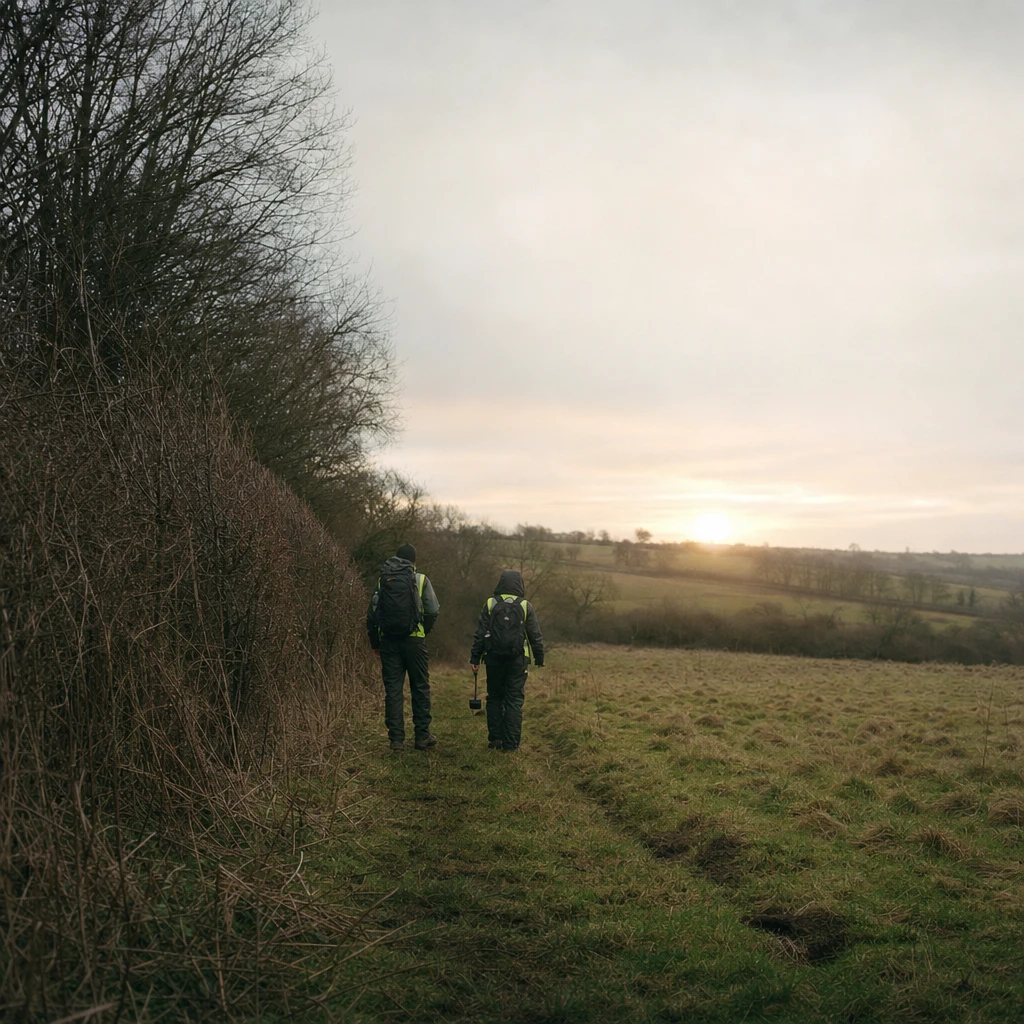





The consequence of working in ecology is fairly simple: the work does not spread evenly across twelve months, so neither does your workload.
Survey season has its own rhythm, and if you are new to consultancy, the hours are probably the bit that takes the most getting used to.
What a survey week actually looks like
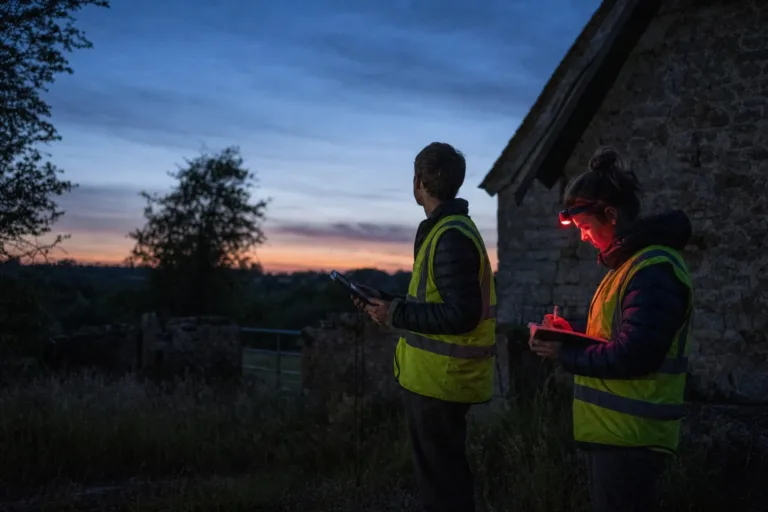
A bat emergence survey starts around sunset. A dawn re-entry survey finishes after sunrise.
In midsummer, those two points are not especially far apart.
Add travel at both ends and a single survey can take up far more of your day than the survey itself. Do that two or three times in the same week and your sleep pattern starts to look very different from everyone else’s.
Daytime work is easier on the body, but it can be just as demanding on the diary.
Habitat surveys, protected species walkovers, reptile checks and other seasonal work all have their own timing constraints, and a lot of them compete for the same few months.
That is what makes spring and summer feel so compressed.
The bit people underestimate
The surveys are only part of the job. The reports still need to be written.
You can spend an evening collecting data, but the client is ultimately paying for the interpretation, advice and report that comes afterwards.
That is where the real squeeze happens. Your evenings can disappear into fieldwork while your daytime hours are spent writing up the surveys you did the week before.
If you are not careful, the backlog builds quietly.
By autumn, you can be looking at notes from months earlier trying to remember details that felt obvious at the time.
I learned quite quickly that writing things up as soon as possible is not just good practice. It saves you a huge amount of time later.
Good employers manage the season properly
There is a big difference between being busy and being permanently overloaded.
Good employers understand that late surveys, dawn starts and travel all affect the rest of the working week.
They protect report-writing time.
They look at how many surveys one person is carrying.
They do not treat every spare hour in the diary as an opportunity to add another job.
That is something worth asking about at interview.
Not just:
“How much fieldwork will I do?”
But:
“How do you manage workloads during survey season?”
The answer can tell you a lot about what working there will actually feel like.
Winter is different
Winter is not a holiday. The work just changes.
There are still surveys, including wintering bird work, hibernation checks, some tree assessments and ground-level roost inspections.
But the pace is different. More time goes into reports, licence applications, training, professional development and planning for the year ahead.
It also tends to be when people finally take some of the leave they struggled to fit in during June and July.
For me, winter feels much more predictable. You are still busy, but the working day looks more like a normal working day again.
What I would tell somebody starting their first season
Protect your sleep early rather than waiting until you are exhausted. Write your notes up while they are fresh.
And say something if the workload starts becoming too much.
It is much easier to fix a problem in May than to keep absorbing it until August.
The people who cope best with survey season are not necessarily the ones who say yes to absolutely everything.
They are usually the ones who learn quickly how to manage their time and energy.
Is it worth it?
For me, yes.
Survey season can be tiring, but it is also the part of the job where you are out in the field, seeing things most people never see and building experience quickly.
Some weeks are long.
Some surveys are cold, wet and uneventful.
Others remind you exactly why you wanted to work in ecology in the first place.
The tiredness is real.
So is the reward.
Knowing both in advance helps you make much better decisions about the kind of employer you want to work for and the kind of career you want to build.
For interesting tips visit Aspire in Ecology. Looking for your first job – Ecology Ready can help