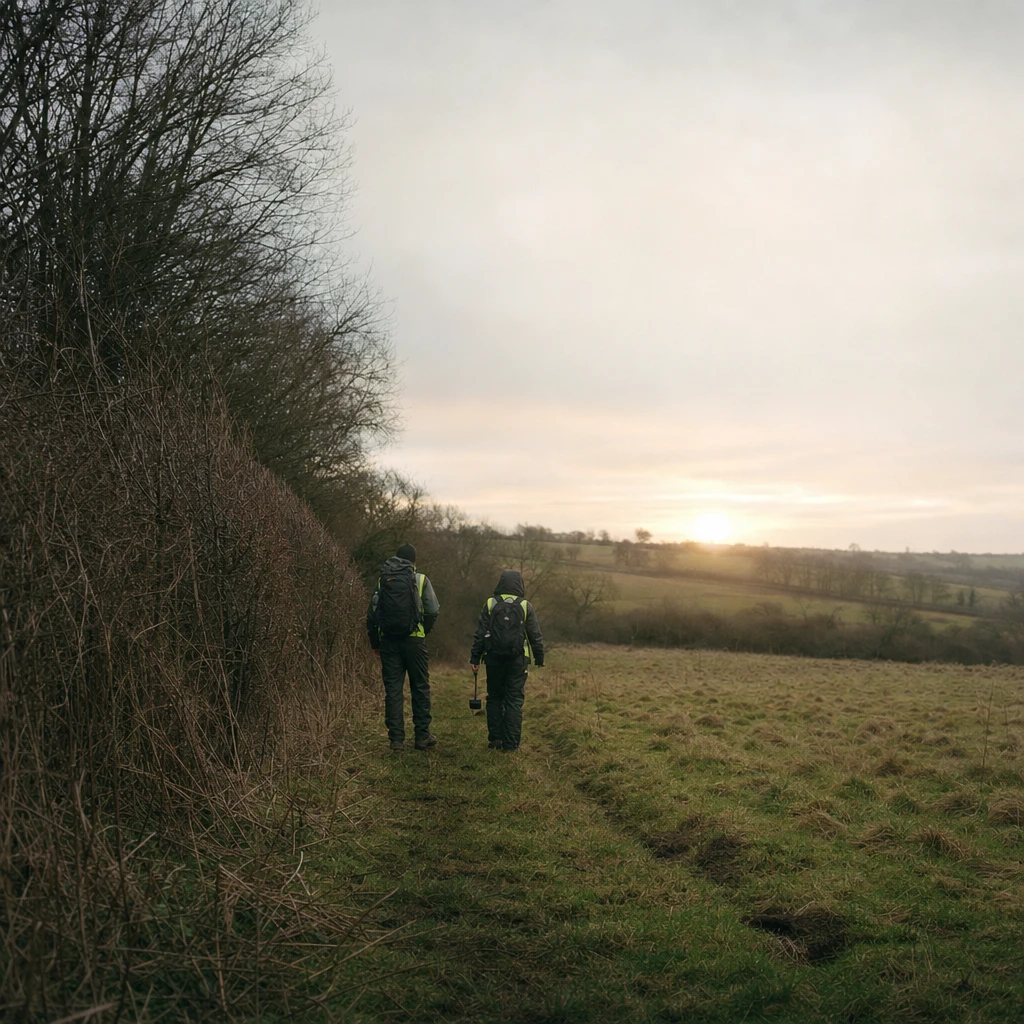





Ecology is a seasonal profession, and nobody really explains what that means until you are living it. Job adverts mention survey season in passing. They rarely describe what it does to your year.
This is not a warning. Plenty of ecologists love the season and structure their lives around it happily. It is just worth knowing in advance rather than finding out in your first May.
Why the season exists
Most of what an ecologist surveys is only there, or only detectable, for part of the year. Bats are active in the warmer months. Breeding birds breed in spring. Many plants cannot be identified with confidence outside their flowering period.
Survey work therefore concentrates into the warmer half of the year, roughly spring through to early autumn, with the exact windows depending on what is being surveyed and the guidance that applies.
The consequence is simple. The work does not spread evenly across twelve months, so neither does your workload.
What a survey week actually looks like
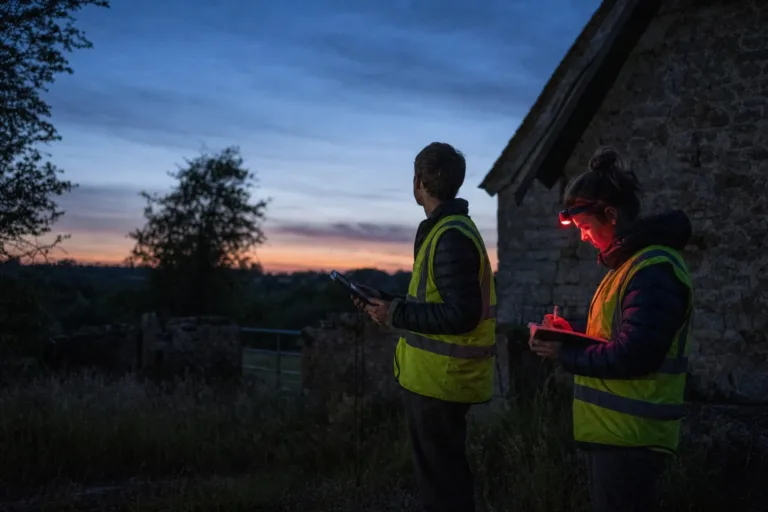
The hours are the part people underestimate. A bat emergence survey starts around sunset and a dawn re-entry survey finishes after sunrise, and in midsummer those two points are not far apart.
Add travel at both ends, and a single night can occupy far more of your day than the survey itself. Do that two or three times in a week and your sleep pattern stops resembling anyone else’s.
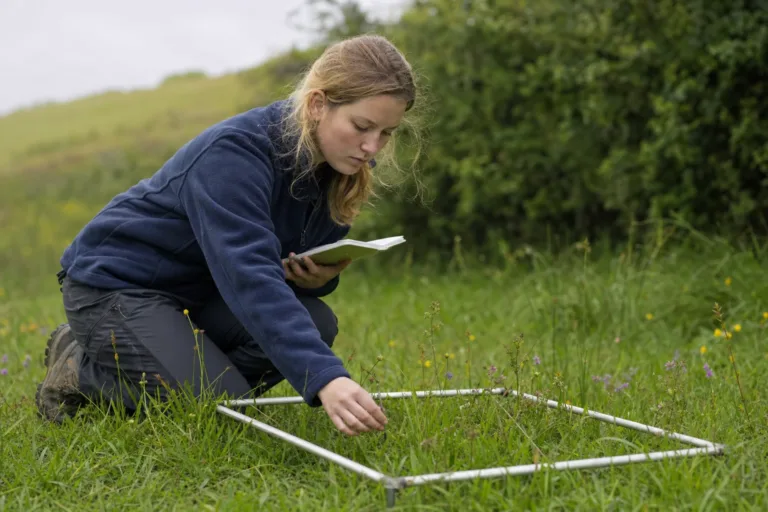
Daytime survey work is gentler on the body but heavier on the diary. Habitat surveys, protected species walkovers and reptile checks all have their own timing constraints, and they compete with each other for the same weeks.
The bit nobody warns you about
Reports still have to be written. The surveys generate the data, but the deliverable is a document, and the document does not write itself while you are in a field.
This is the real squeeze of survey season. Your evenings go to fieldwork and your days go to writing up the fieldwork you did last week, and the backlog grows quietly until autumn.
Good employers manage this deliberately, by protecting writing time and being realistic about how many surveys one person can carry. Less good ones let it build and call it commitment. This is worth asking about at interview.
Winter is not a holiday, but it is different
The off season is when reports get finished, licences get applied for, training happens, and people take the leave they could not take in June.
Some survey work continues. Wintering bird surveys, hibernation checks, tree assessments and ground level roost inspections all belong to the colder months. The pace is simply more human.
Winter is also when most hiring happens, because companies are working out their capacity for the season ahead. If you are looking to move, this is your window.
How to survive your first season
Three things make more difference than anything else.
Protect your sleep deliberately rather than hoping it works itself out. Blackout blinds and a firm rule about not answering emails at two in the afternoon after a dawn survey are not indulgences.
Write up as you go. An hour spent on notes the morning after a survey saves three hours in October when you cannot remember the site.
Say something early if the load is wrong. Survey season rewards people who flag a problem in May, and punishes people who absorb it silently until August.
Is it worth it
Most ecologists would say yes, and they would say it for the same reason. The season is the part of the job where you are outdoors, doing the thing you trained for, and seeing things most people never see.
The tiredness is real and so is the compensation. Knowing both in advance is what lets you choose an employer that handles it well, which matters far more than choosing one that pretends it does not exist.