




For anyone starting their first season as an early-career ecologist, the technical side of the job is only part of the challenge.
You will learn survey methods, species identification and how to use field equipment. But you will also learn how to manage long days, late finishes, tiredness, travel, changing weather and the pressure of doing fieldwork alongside more experienced ecologists.
A first ecology survey season can be exciting, exhausting and incredibly valuable.
Here is what I wish I had known before mine.
Ecology Survey Season Is Longer Than You Think
One of the biggest things new ecologists underestimate is how long the busy survey period can feel.
It is not simply one difficult month.
Depending on the work your consultancy undertakes, the ecology survey season can run from roughly April through to September, with different surveys and species peaking at different points.
That can mean months of:
- early starts
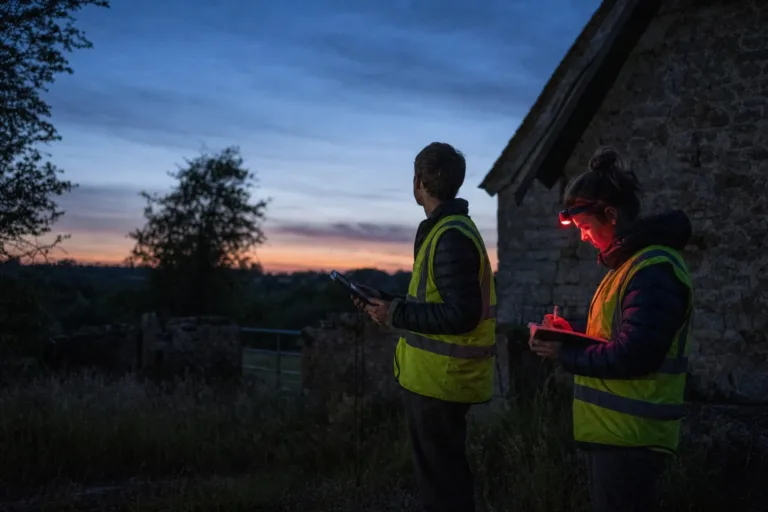
- late-night surveys
- long drives
- changing rotas
- fieldwork alongside daytime responsibilities
- working around weather and survey windows
The tiredness is usually cumulative rather than dramatic.
People rarely reach week three and suddenly decide they cannot continue.
What tends to happen is that the early part of the season feels manageable. You are enthusiastic, learning quickly and often enjoying being out in the field.
Then you reach July or August and realise you have been working unusual hours for several months.
That is when fatigue can start to catch up with you.
Protect Your Rest Days Early
One of the most useful things you can do during survey season is protect your recovery time before you feel like you need it.
When you are new to ecology, there can be a temptation to say yes to everything.
You want experience.
You want survey hours.
You want to prove that you are reliable.
All of that is understandable.
But consistently taking on too much can quickly become counterproductive.
Rest days matter because fatigue affects more than simply how tired you feel.
It can affect:
- concentration
- driving
- species identification
- note-taking
- decision-making
- communication
- general wellbeing
Protect your rest days early while you still feel fine.
By the time you realise you desperately need them, you may already be running on empty.
A good employer should understand that sustainable survey rotas are important.
Good Field Kit Matters More Than People Admit
You do not need to buy the most expensive equipment available before your first survey season.
But some things are worth getting right.
Bad boots and a cheap head torch can make a long survey considerably harder than it needs to be.
So can discovering halfway through a wet evening that everything you own is soaked.
A basic field kit for ecology survey work might include:
- comfortable waterproof boots
- waterproof jacket and trousers
- reliable head torch
- spare batteries or power bank
- warm layers
- spare socks
- water
- food and snacks
- notebook and pens
- insect repellent
- basic first-aid items
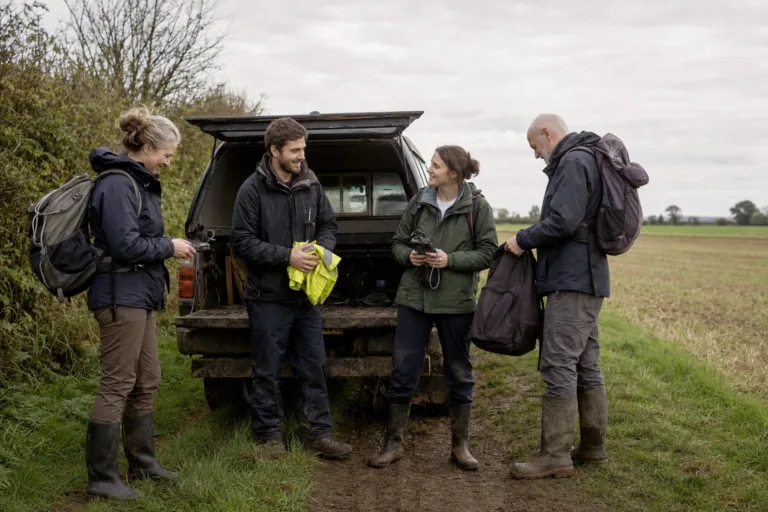
- a complete set of dry clothes in the vehicle
That final one is easy to underestimate.
A spare jumper, trousers and socks in the van can feel unnecessary right up until the evening you genuinely need them.
You Will Make Mistakes
This is probably the thing I would most want an early-career ecologist to understand. You are going to get things wrong.
Everyone does.
I misidentified a species in front of a client during my second survey season and spent about a week convinced I had ruined my career.
My manager’s response was much simpler.
He asked what I would check differently next time.
That was effectively the end of it.
The mistake mattered because we needed to understand what had happened and make sure the process worked properly.
But it was not treated as some enormous personal failure.
That experience stayed with me.
Good Ecology Consultancies Expect Early-Career Ecologists to Be Learning
A good company does not employ someone at the beginning of their ecology career and expect them to already know everything.
Early-career development should involve:
- supervision
- checking
- feedback
- technical review
- opportunities to ask questions
- learning from more experienced ecologists
That does not mean mistakes do not matter.
Ecological consultancy involves legal, planning, environmental and commercial responsibilities, so accuracy is important.
But good systems recognise that people are developing.
There should be checks built into the process.
If every mistake is treated as a character flaw rather than an opportunity to understand what went wrong and improve the process, that tells you something about the company.
Ask Questions During Your First Ecology Survey Season
One of the biggest mistakes people make early in their career is trying too hard to appear knowledgeable.
Ask questions.
Ask more of them than feels comfortable.
Your first year is probably the best opportunity you will ever have to do that.
Nobody expects somebody three months into their ecology career to know everything.
If you are unsure why a survey is being undertaken, ask.
If you do not recognise a species, ask.
If you do not understand why a particular methodology is being used, ask.
If somebody gives you an instruction you do not understand, ask them to explain it.
The window where people actively expect you to be learning is relatively short.
Use it.
Do Not Just Learn What to Do – Learn Why
It is easy during your first survey season to focus entirely on completing the immediate task.
You are told where to stand, what to record and when the survey finishes.
But try to understand why the survey is being undertaken.
Ask yourself:
- what is the client trying to achieve?
- why is this species relevant?
- what planning requirement is driving the survey?
- why has this methodology been selected?
- what happens to the data afterwards?
- how might the results affect the project?
That is the difference between simply accumulating survey hours and starting to understand ecological consultancy.
The strongest early-career ecologists gradually begin connecting fieldwork with the wider project.
Learn From the People Around You
Survey season gives you something that classroom learning cannot fully replicate: repeated exposure to experienced ecologists working in real situations.
Pay attention to how they work.
Watch how they:
- identify species
- record information
- organise equipment
- communicate with clients
- deal with uncertainty
- respond when something unexpected happens
- make decisions in the field
Some of the most useful lessons you will learn will never appear on a training slide.
They come from spending time alongside people who have already made hundreds of decisions in the field.
Keep a Record of What You Are Learning
It is worth keeping your own record during survey season.
That could include:
- survey dates
- survey type
- species encountered
- equipment used
- techniques practised
- new skills developed
- questions you asked
- things you want to improve
- useful feedback from colleagues
This can help with future applications, professional development and licence progression.
It also gives you a much clearer picture of how far you have progressed.
At the beginning of the season, everything can feel unfamiliar.
By September, you may be doing things confidently that felt intimidating in April.
Your First Survey Season Is Supposed to Be a Learning Experience
Nobody starts their first ecology survey season as a finished ecologist.
The whole point is that you are beginning to turn academic knowledge into practical experience.
You will probably have evenings where you are tired.
You will forget something.
You will ask questions you later think were obvious.
You may misidentify something.
You may finish a survey wondering whether you actually know anything at all.
Then, gradually, things start becoming familiar.
Species calls become easier to recognise.
Equipment becomes easier to use.
Survey methods make more sense.
You understand why certain information matters.
And you begin to feel less like somebody observing the profession and more like somebody actually working within it.
What I Would Tell Someone Starting Now
If I could give one piece of advice to somebody starting their first ecology survey season today, it would be this:
Ask more questions in year one than feels comfortable.
The period where nobody expects you to know everything is short.
Use it to learn as much as you possibly can.
Protect your rest.
Buy decent boots.
Keep dry clothes in the van.
Pay attention to the experienced ecologists around you.
And when you inevitably get something wrong, learn from it and move on.
Your first ecology survey season is not about proving that you already know everything.
It is about beginning to build the experience that eventually means you do.
Explore the Ecology Careers Hub
If you are starting or developing a career in ecology, take a look at our Ecology Careers Hub for practical advice on fieldwork, consultancy careers, gaining experience and progressing within the profession.
You can also explore Ecology Ready, our live programme designed to help aspiring and early-career ecologists understand how ecological consultancy works in practice.