



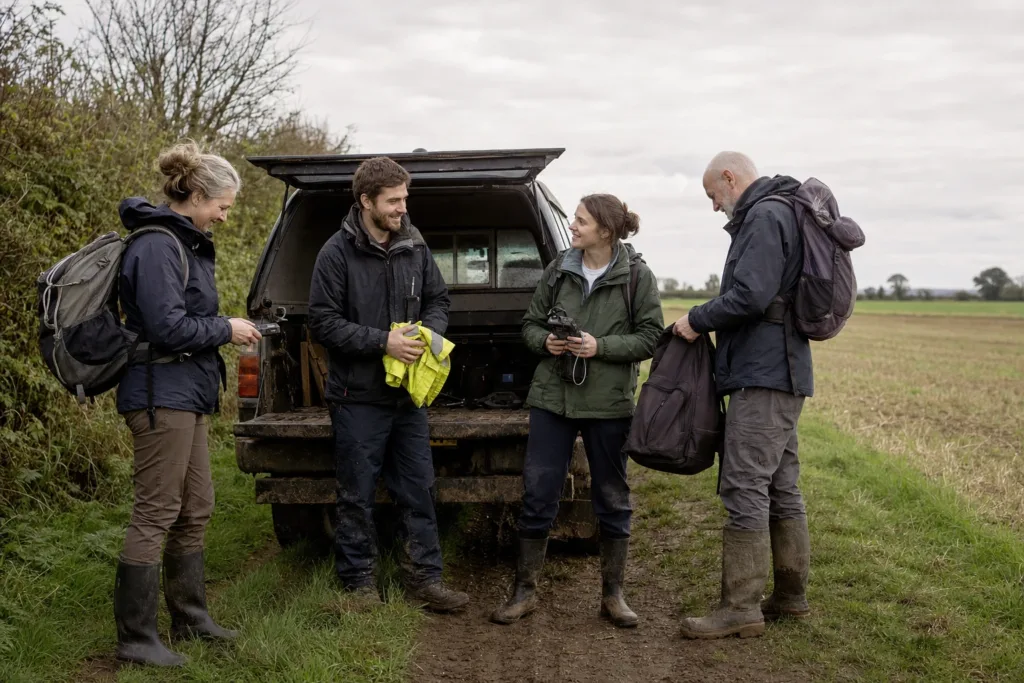
If you are looking to work in ecological consultancy, particularly in a field-based role, a full UK driving licence is one of the most important practical requirements to think about.
For most field-based ecology roles, it is effectively essential to have one.
That can be frustrating if you are trying to enter the sector and have not yet passed your driving test, but it is better to understand why employers ask for it and what you can do if you are still learning.
Importantly, needing a driving licence does not necessarily mean you need to own a car.
Why is a driving licence so important in ecology?
Ecological consultancy involves a lot of travel. Survey work can take place almost anywhere, including:
- housing developments
- farms
- woodland
- quarries
- industrial sites
- road schemes
- railway land
- utilities infrastructure
- private estates
- remote rural locations
Many survey sites are nowhere near a railway station or reliable bus route.
Even when public transport is available, the timing of ecological surveys can make using it unrealistic.
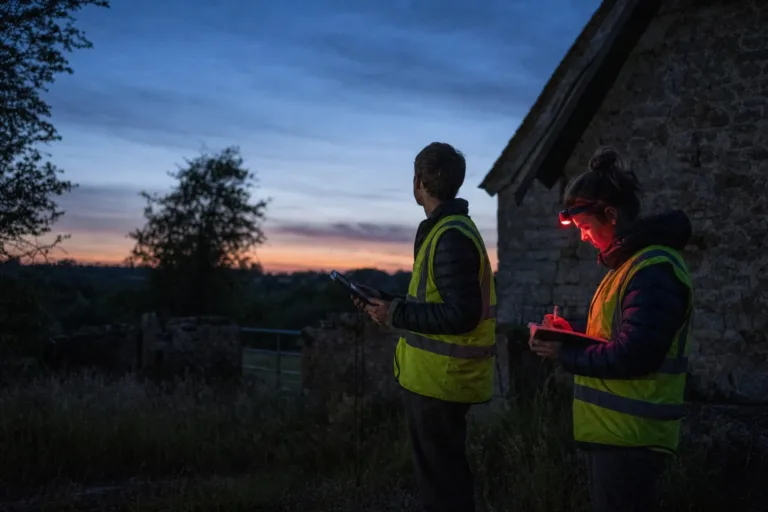
Bat surveys, for example, may involve arriving before sunset and finishing late at night. Dawn surveys can require you to be on site well before normal working hours.
Other surveys may involve travelling between several sites in one day.
Employers therefore need confidence that their field teams can get to the right place, at the right time, reliably.
Field-based ecology roles usually require a licence
If you are looking at roles such as:
- assistant ecologist
- graduate ecologist
- field ecologist
- seasonal ecologist
- protected species surveyor
- bat surveyor
- habitat surveyor
- botanical surveyor
you should normally assume that a full driving licence will be required. There may occasionally be exceptions, but they are exactly that: exceptions.
For a predominantly field-based role, an employer cannot normally rely on one person constantly needing lifts from colleagues. Field teams may change from day to day, projects can be spread across a wide geographical area and survey schedules frequently change. Being able to drive gives the consultancy much greater flexibility when allocating staff to projects.
You may be travelling as part of a team
Having a driving licence does not mean you will necessarily drive yourself to every survey. In many consultancies, field staff travel together.
You might:
- meet at the office
- meet at a central location
- travel with another ecologist
- share a company vehicle
- use a pool vehicle
- use a hire car
- share the driving on longer journeys
A team of several ecologists travelling together is very common. However, employers still want people within that team who are able to drive. If only one person can drive, the team’s flexibility becomes limited.
Do you need your own car?
This is an important distinction that many people entering the sector misunderstand.
An employer asking for a full driving licence is not automatically saying: “You must own a car.”
Many larger consultancies provide company vehicles, pool cars or hire vehicles for project work. Some employers may ask whether you have access to your own vehicle, but that is a separate requirement and should be stated clearly in the job advert.
The important thing is to check the wording carefully.
A role asking for a full UK driving licence is not necessarily asking you to provide your own transport.
What if you do not have a driving licence yet?
If you are still learning to drive, that does not mean you should stop applying for ecology roles altogether.
It does mean you need to be realistic about which roles are likely to be open to you.
Desk-based positions, GIS roles, environmental planning, data-focused work and some research or support roles may offer more flexibility than field-heavy consultancy positions.
If your goal is field-based ecological consultancy, though, getting your licence should probably be treated as a priority.
Even if you are not yet test-ready, being able to tell an employer that you are actively learning, have a test booked or are progressing towards your licence is much stronger than simply leaving the issue unexplained.
The key point is that employers are not usually asking for a driving licence because they want to make life difficult for applicants.
They ask because ecology work is mobile, survey times can be unusual and projects are often in places that are difficult to reach any other way.
For field-based ecology roles, being able to drive gives both you and the employer far more flexibility.
And remember: a driving licence and owning a car are not the same thing.
Many ecologists use company vehicles, pool cars or shared transport once they are in the role.
Keep building your ecology career
If you are trying to understand what employers are looking for, how consultancy works in practice or what you can do to strengthen your chances of getting into the sector, visit the Ecology Hub.
It brings together practical career advice, guidance on ecology roles, survey work, professional development and the realities of working in ecological consultancy.
If you are a graduate or early-career ecologist looking to build practical consultancy knowledge before applying for your first role, you can also take a look at Ecology Ready.
Ecology Ready is designed to help people understand how ecological consultancy works beyond the academic side, including areas such as fieldwork, reporting, GIS, planning, communication and commercial awareness.