



Demo content only: Tarnbeck Ecology is a fictional company, and the person and career journey described in this blog are fictional. This piece has been created purely to demonstrate the type of employer and employee story Aspire in Ecology can produce for ecology businesses.
I did not come into ecology in a straight line.
I finished a zoology degree with no survey experience at all, spent a year working in a garden centre and applied for about forty Assistant Ecologist and seasonal jobs before Tarnbeck eventually took me on for a survey season.
At the time, I remember feeling as though everyone else applying for ecology jobs had somehow spent university doing bat surveys, volunteering with wildlife groups and learning every plant in Britain while I had completely missed the memo.
Looking back, that probably was not true. But it certainly felt like it.
My degree gave me a good grounding in the science, but I had very little idea what ecological consultancy actually looked like day to day. I knew I wanted to work in ecology. I just did not have much evidence yet that I could actually do the job.
Where I started
My first title was Assistant Ecologist, which sounded quite impressive when I told people what I was doing.
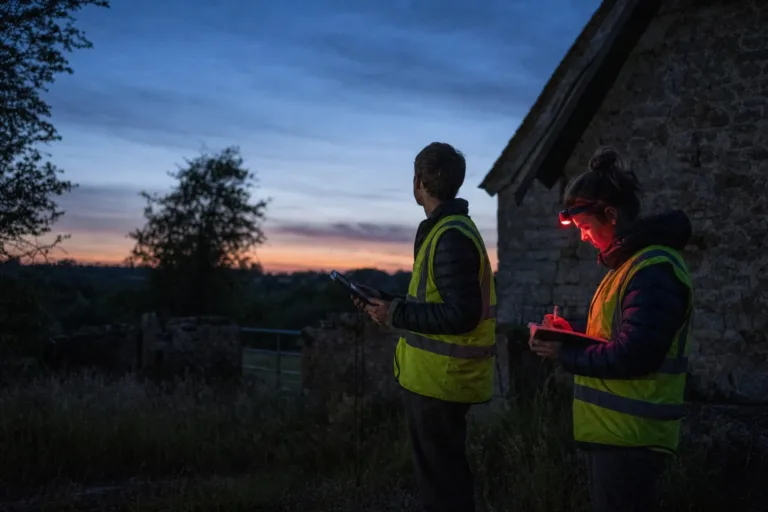
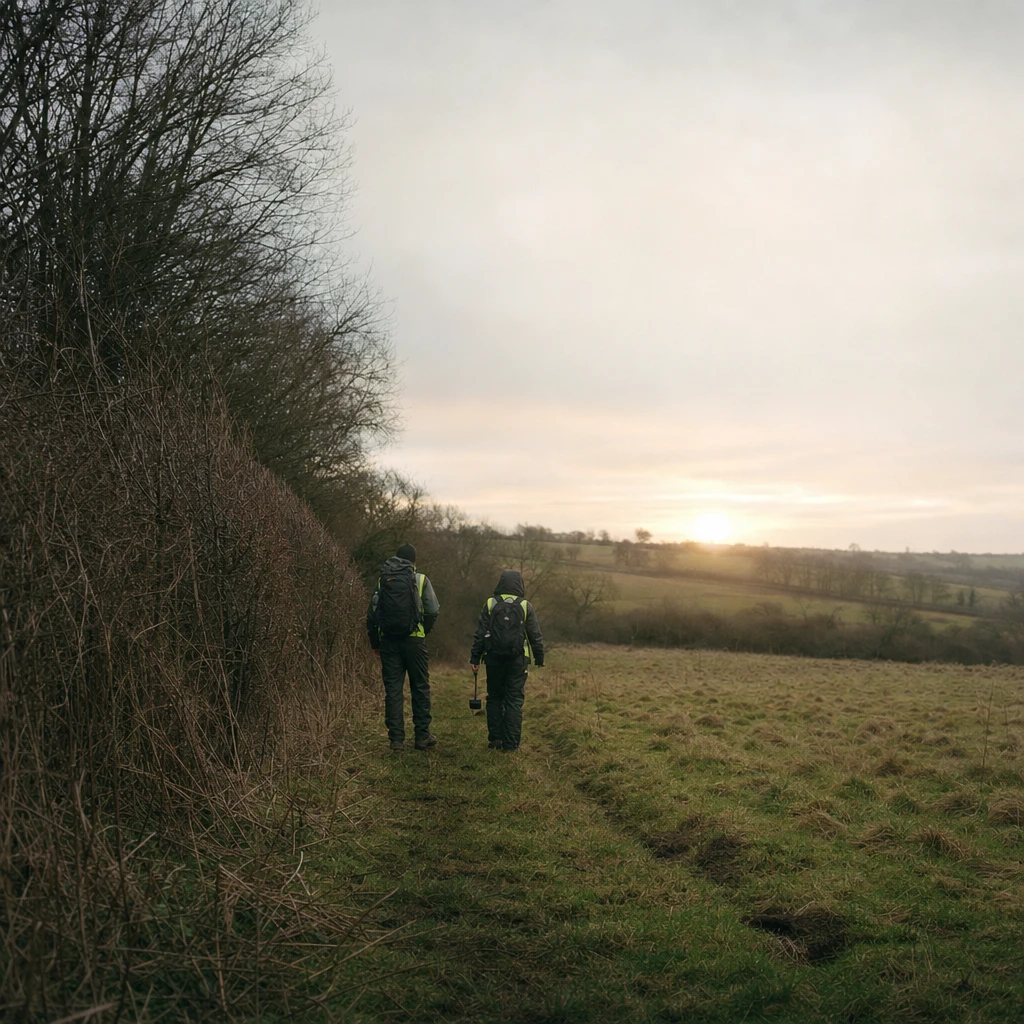
In practice, it meant carrying kit, checking batteries, writing up other people’s notes and standing in fields at dusk in April when it is still genuinely cold.
There was a lot I did not know.
I remember my first few bat surveys spending half my time concentrating on what I was supposed to be doing and the other half worrying that everyone else somehow knew exactly what was happening.
They didn’t. They just had more experience.
Nobody at Tarnbeck pretended the job was glamorous either. Some evenings were brilliant. Others involved wet boots, a lukewarm flask of coffee and a long drive home after midnight.
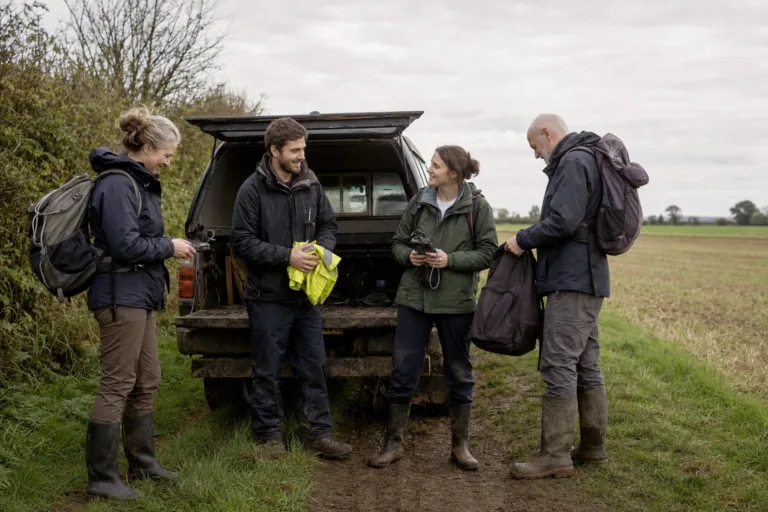
What made me want to stay was that I was out with someone more experienced from the first week.
They did not just tell me where to stand. They explained why we were positioned there, what features we were looking at, what might indicate a potential roost, what they were listening for and how the survey findings would eventually feed into the project.
That made a huge difference. It meant I was learning the job rather than simply accumulating hours.
Still no Bat licence!
The first season was mostly about confidence
I think one of the biggest changes during my first season was that I stopped feeling completely out of place.
At the beginning, I questioned everything I did.
Was I recording enough detail?
Had I heard the call correctly?
Should I mention something or would it sound stupid?
By the end of the season, I was still asking questions, but they had changed.
Instead of asking, “What am I supposed to be doing?” I was starting to ask why things were being done in a particular way.
That was probably the point where I began to feel like I was actually becoming an ecologist rather than somebody temporarily helping ecologists.
I was also starting to understand that the people who looked completely confident had simply spent years seeing the same situations in different forms.
There is no substitute for that.
What the licence actually took
Getting my first bat licence took about three survey seasons.
Before I started, I think I imagined there would be a course, some paperwork and then eventually somebody would decide I was ready.
It was not really like that. Most of it was simply time.
You need a proper amount of supervised experience behind you before somebody is going to sign anything to say they believe you are competent.
That experience also has to mean something.
Doing the same straightforward survey repeatedly is useful, but what really developed me was seeing different buildings, different situations and different types of evidence.
Sometimes nothing happened.
Sometimes the survey went exactly as expected.
Other nights gave me something completely new to think about.
That is why there is no real shortcut.
You gradually build up the experience until situations that once felt unfamiliar start to feel normal.
I underestimated the paperwork
The part I got badly wrong was the record keeping.
During my first season, I assumed I would remember everything.
I didn’t.
I would finish a late survey, get home tired and tell myself I would update my records tomorrow.
Tomorrow would become next week.
Then another survey would happen.
By the middle of my second season, I had a horrible collection of half-complete notes, calendar entries and emails that I needed to piece together.
I lost a ridiculous amount of time reconstructing things I could have recorded properly in five minutes at the time.
After that, I became much more disciplined.
Every survey went into my record.
Date. Location. Survey type. What I had done. Who I had worked with. Anything useful I had seen or learned.
If you are working towards a licence, that record becomes incredibly important later.
It is also useful simply for seeing your own progress.
At the start of my first season, I had almost nothing to put on it.
A couple of years later, I could look back and actually see how much experience I had built.
Having employer support made the difference
Tarnbeck paid for my formal training and the eventual application, which obviously helped.
But the more important thing was that my development happened inside my normal job.
The survey hours I needed were part of my workload.
I was not expected to do a full week of ecological consultancy and then somehow build all of my licence experience in my evenings and weekends as well.
I know people do build experience independently, particularly through bat groups and volunteering, and that can be an excellent route.
But realistically, I do not think I would have progressed as quickly without the support I had at work.
A full survey season can be tiring enough.
Trying to add another large amount of fieldwork on top of it would have been difficult for me.
The other advantage was consistency.
The people supervising me knew what I had done previously, where I was improving and where I still needed more experience.
I was not starting again with somebody new every time.
Getting the bat licence did not suddenly make me an expert
This is another thing I probably misunderstood at the beginning.
I thought getting the licence would feel like reaching the end of something.
It didn’t.
It felt more like reaching the point where I could start taking more responsibility.
There were still plenty of situations where I needed somebody more experienced.
There still are.
A bat licence is evidence that you have reached a particular level of competence. It is not proof that you now know everything about bats.
If anything, gaining more experience makes you realise how much variation there is and how many unusual situations you can encounter.
What I would tell somebody starting now
Ask about licence development at interview.
But do not just ask whether the company “supports” people getting licences.
Almost every company can say yes to that.
Ask who would supervise you.
Ask how many bat licence holders are in the team.
Ask whether the surveys you need will form part of your normal workload.
Ask whether you will be expected to gain additional hours in your own time.
Ask who would eventually be in a position to sign off your experience.
Those answers tell you far more about how a company develops early-career ecologists than a paragraph on a careers page about investing in people.
And once you start building experience, keep your records properly from day one.
Seriously.
Do not tell yourself you will remember it later.
You won’t.
Looking to get your first position in Ecology, Ecology Ready and for more useful resources look at the Ecology Hub